


The full story
Echo begins with a cold opening establishing the central conflict: Echo is deaf, she has killed people, she is being controlled by her adoptive father Kingpin, but she is beginning to question her role in this violence. The series is about the moment someone realizes they are not the hero of their own story—they are either a villain or a victim, or some complicated version of both.
Echo, also known as Maya Lopez, is Choctaw. She lives on the Choctaw reservation. Her family has roots in the land and in a community that predates America. Her father was killed before the series begins. Her adoptive father, Kingpin, has used her deafness and her grief to make her into a weapon. He treats her as an asset, not a person. When she is useful, she is valued. When she is not useful, she is expendable.
The series shows Echo discovering who her father was and what he believed. Her biological father believed in protecting the Choctaw community. He did not use violence for power—he used it to defend. Kingpin has taught Echo a very different philosophy: use violence to dominate, to control, to become powerful. These philosophies are in direct conflict within her.
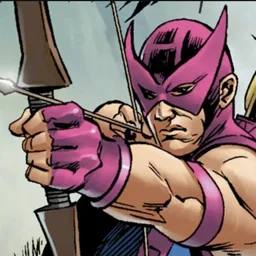
When Echo meets Clint Barton, she is initially his enemy. But Clint sees something in Echo that he recognizes: a person whose violence was directed by someone else, a person caught in a cycle they did not choose, a person who might have the capacity to break that cycle. Clint does not try to save Echo. He shows her that breaking cycles is possible.
Echo's arc is about choosing not to be the person Kingpin made her. This is not simple. She cannot undo all the violence she committed. She cannot save the people she hurt. But she can choose not to hurt more people. She can reclaim her connection to her community, to her father's legacy, to the Choctaw values Kingpin tried to erase.
The series does not redeem Echo for her violence. It shows her accepting responsibility while choosing a different future. She returns to the reservation. She attempts to rebuild her relationship with her community. She is accepted cautiously, not forgiven fully, but given the opportunity to be part of something larger than her own trauma.
Echo suggests that redemption is not forgiveness. It is not absolution. It is the hard work of accepting what you have done, taking responsibility for it, and choosing to be different going forward, knowing that the hurt you caused will not be undone.