
The full story
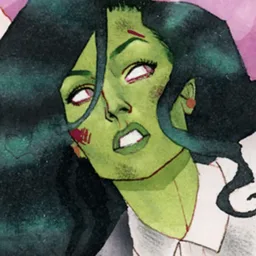
She-Hulk: Attorney at Law begins with Jennifer Walters as a successful lawyer. She is competent, intelligent, and in control of her life. Then she transforms into She-Hulk after Bruce's blood enters her system during a car accident, and immediately everyone around her tries to tell her who she should be and what she should do with her power. The loss of agency is immediate and total.
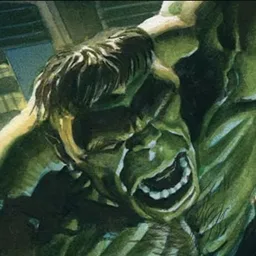
Bruce Banner wants to train her, to teach her how to be a hero. The military wants to recruit her. Her family wants her to be famous. She wants to keep her life the way it was. Jennifer's refusal to become a hero, her assertion that she does not want the responsibility of superhuman power, is presented as reasonable and countercultural. In the MCU, we have watched multiple people accept power and learn to wield it. Jennifer is saying: I do not want to. This is a legitimate choice.
But the series also shows that having power in a world with problems creates a moral question Jennifer cannot fully escape. When someone needs help and you have the power to help, what justifies your refusal to help? Jennifer finds that she cannot answer this question. She wants to say the help is not her responsibility, but she is not actually a person who can say that without it costing her something internally.
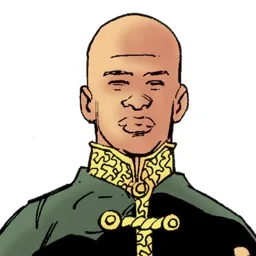
The case law subplot gives the series texture beyond superhero narrative. Jennifer defends people who have been harmed—including Emil Blonsky (the Abomination), Wong, and various superhumans—trying to use justice systems to correct wrongs. She discovers that the justice system often fails those people. Sometimes she can use her power to achieve outcomes the law cannot. This creates constant tension: should she pursue justice through systems that are limited, or should she use her power to pursue justice outside those systems?
Jennifer also navigates the complications of being a woman with power in a culture that punishes women for having it. When she dates Daredevil, the media obsesses over it. When she's successful at her job, men feel threatened. Her journey involves accepting the responsibility that comes with power while also refusing to shrink herself to make others comfortable.
The finale takes a radical meta-textual turn. As the show descends into typical MCU chaos—Abomination fighting, villains teaming up, Hulk family drama—Jennifer stops mid-scene, transforms into She-Hulk, and says "No." She literally pauses the Disney+ interface and breaks out of the show itself.
Jennifer crashes through the Disney+ menu, lands in a Marvel Studios office, and demands to speak with "the writers." She confronts them about ruining her show with terrible plotlines and formulaic superhero endings. When they tell her to take it up with Kevin, she assumes they mean Kevin Feige. Instead, she's brought before K.E.V.I.N.—Knowledge Enhanced Visual Interconnectivity Nexus—an AI algorithm that makes all MCU creative decisions.
K.E.V.I.N. looks like a motion-capture helmet on a throne. Jennifer argues her case like a lawyer: her show has been about her life, her choices, her struggles with being objectified and controlled. The finale was turning into a generic superhero fight that has nothing to do with her actual story. She demands they change it.
K.E.V.I.N. gives her the power to rewrite her own ending. Jennifer eliminates Bruce's unnecessary cameo, takes away the villain's powers, transforms Abomination back into Emil, adds Daredevil into the resolution, and changes the nighttime action sequence to broad daylight. She literally rewrites her story to be about what she wants: closure, not spectacle.
The revised finale is smaller, more personal. Jennifer confronts the people who leaked her private information, takes legal action, and reclaims her narrative. She ends the series on her own terms—not as a reluctant superhero but as a lawyer who happens to have powers and will use them when she chooses, not when others demand it.
The series does not present a clean answer about power and responsibility. Jennifer does not enthusiastically embrace heroism. She accepts the responsibility because she has accepted that having power and refusing to use it when people need help is a moral stance she cannot actually hold. She becomes She-Hulk not because she believes it is her duty but because she has accepted that power creates obligations whether she wanted those obligations or not.
The K.E.V.I.N. sequence is the show's thesis statement: women, especially women with power, are constantly told what stories they should inhabit and how they should behave within them. Jennifer's act of rewriting her own ending is an act of reclaiming agency not just from villains but from the narrative structures that try to control her. She-Hulk: Attorney at Law ends by suggesting that the most radical thing a powerful woman can do is refuse the story everyone expects her to tell and insist on writing her own instead.