The full story
Loki begins with a premise that seems absurd until you recognize it as perfectly logical: there is a predetermined timeline called the Sacred Timeline, and anyone who deviates from it is erased from existence. The Time Variance Authority is a bureaucratic entity that preserves this timeline, staffed by people who have been taught that preventing variation is neutral work, merely maintenance. They have not recognized that they are enforcing a specific vision of how reality must unfold.
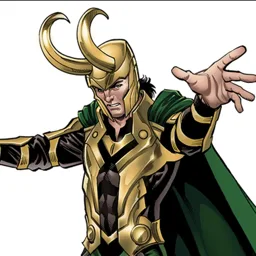
Loki is arrested for creating a variance when he escaped with the Space Stone in Avengers: Endgame. He is offered a choice: face pruning or work for the TVA hunting other variants. But this is not a choice. It is coercion with a cosmetic offer of agency. Loki accepts because he has no alternative, and he spends the season slowly understanding that this dynamic—the appearance of choice when choice has been removed—is how the TVA maintains control across all of reality.
Sylvie, another Loki variant, has spent her life running from the TVA. She tells him that the Sacred Timeline is a lie, that the Time Keepers eliminated free will from all reality to maintain order. Everyone's life is written. Everyone's choices are predetermined. Sylvie has chosen to resist this, even though her resistance is futile against the machinery of the TVA. She chooses rebellion not because it can succeed but because choosing rebellion is the only way she knows to be free.
This becomes the central theme: the difference between resignation and resistance when the outcome is unknown. Loki begins the series accepting that he cannot defeat the TVA. He is one person against an infinite bureaucracy. But he ends understanding that accepting that premise means accepting the premise of the TVA itself: that power is distributed such that resistance is futile.
Loki's character arc moves from someone who believes he deserves to rule, who sees power as the ultimate good, toward someone who understands that the only power that matters is the power to choose. He watches Sylvie make choices he does not understand, take risks that seem suicidal, pursue rebellion that is mathematically likely to fail. And he begins to understand that she is free in a way he has never been, because she is choosing despite uncertainty, rather than accepting predetermined outcomes.
The series constructs an elaborate metaphor about choice and determinism through the TVA's operations. Variants are not evil people making evil choices. They are people who deviated from the predetermined path. Some variants became heroes, some became villains, some became ordinary people. The difference between them and the Sacred Timeline is not moral—it is circumstantial. They made different choices because different things happened to them.
Loki's final act is a rejection of predestination. Sylvie kills the Time Keeper and causes the collapse of the Sacred Timeline. She chooses this act of destruction because she values the chaos of genuine choice more than the safety of predetermined order. Loki tries to stop her, not because he disagrees with her premise but because he has just discovered that freedom and genuine choice might mean universes branch chaotically, with no guarantee of which outcome is right.
Sylvie chooses anyway. The Sacred Timeline collapses. Infinite timelines proliferate. Loki exists in a moment where the TVA does not control time and he does not know what will happen next. This is terrifying and liberating. He has genuine autonomy for the first time, but he also has no certainty. The series ends with this tension unresolved—Loki has rejected predestination but has not yet discovered what freedom actually means.