The full story
In Afghanistan to demonstrate the Jericho missile for the U.S. military, weapons manufacturer Tony Stark is ambushed and captured by the Ten Rings, a terrorist group armed with Stark Industries weapons. Shrapnel from the attack lodges near his heart.
A fellow prisoner, Ho Yinsen, keeps Tony alive by implanting an electromagnet powered by a car battery. When the Ten Rings demand Tony build them a Jericho missile, he and Yinsen secretly build a miniaturized Arc Reactor to run the electromagnet instead, along with a crude suit of armor. Yinsen holds off the guards so Tony can escape in the suit, and is killed.
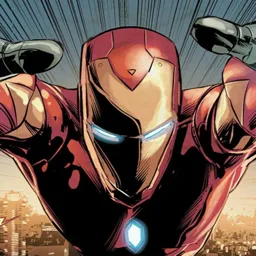
Rescued and flown home, Tony announces at a press conference that Stark Industries will stop manufacturing weapons, alarming the board and his mentor and business partner, Obadiah Stane. At home, he replaces the crude cave reactor with a more powerful one and, working through icing and flight-control failures, builds an improved suit — the Mark II, then the gold-titanium Mark III.
A news report shows the Ten Rings attacking the Afghan village of Gulmira with Stark weapons. Tony flies there in the Mark III and destroys the militants' stockpile himself. Fighter jets scramble to intercept the unidentified flying object on the way home; Tony evades them without engaging, catching one ejected pilot mid-fall before returning to Malibu.
Weapons keep reaching the black market despite Tony's announcement. Pepper Potts, Tony's assistant, and Agent Phil Coulson of S.H.I.E.L.D. investigate. Pepper breaks into Obadiah's office and accesses his private files, discovering that Obadiah paid the Ten Rings to kill Tony in Afghanistan and has continued selling Stark weapons on the side.
At a party, Obadiah drugs Tony and cuts the powerful Arc Reactor out of his chest, leaving him to die with nothing to block the shrapnel. Tony survives only because Pepper secretly kept the old, weaker prototype reactor he'd once asked her to destroy, installing it just in time. Obadiah fits the stolen reactor into a massive suit of armor he has built in secret, then attacks Stark Industries to stop Pepper from handing her evidence to Coulson.
Tony, flying in the weaker suit, arrives to fight Obadiah atop Stark Industries. Outmatched by the bigger armor, he lures Obadiah onto the roof directly above the company's large-scale Arc Reactor and has Pepper overload it from the control room below. The surge destroys Obadiah's suit and kills him; Tony flies clear in time.
At a press conference the next day, Agent Coulson hands Tony a prepared statement identifying Iron Man as his bodyguard. Tony ignores the cards and tells the room the truth: "I am Iron Man."
In a post-credits scene, Nick Fury visits Tony at home to tell him he's "become part of a bigger universe" and wants to talk to him about the "Avenger Initiative."